Challenges hosts face in accommodation operations · EP. 10
Host operationsWhy a small recycling request can become a check-out complaint
Introduction
A recycling request can sound like asking guests to clean the property. Keep only essential departure actions and explain each remaining request clearly.


- A small request for a host can feel large to a guest on the last day of a trip.
- Keep guests’ tasks in departure instructions and remove cleaning-team work.
- Check that departure instructions match the conditions given at booking.
- Say what goes where instead of “Follow the rules.”
- Check that a translation does not turn a request into a stronger obligation.
Learn more
Why can a recycling request feel burdensome?
A host writes “Just tidy up the rubbish,” but a guest does not know whether to bag it, separate it or carry it outside. A guest who paid a cleaning fee may find the request larger than expected. The key is to distinguish the guest’s part from the cleaning team’s part, rather than remove every request.
Keep only the guest’s tasks in departure instructions
Sending an internal checklist makes the list longer. Sort the tasks.
| Guest’s tasks | Cleaning team’s tasks |
|---|---|
| Return keys and check belongings | Prepare bedding and perform detailed cleaning |
| Leave waste in the designated place | Ventilate and check supplies |
| Check that the door is locked | Set up for the next reservation |
The items vary by property, but tasks assigned to different roles should not be mixed into one list.
Do the instructions match the booking conditions?
New requests on departure day can feel like added conditions. Compare the house rules on the booking platform with the guide. The guide organizes existing instructions rather than introducing new conditions. Before using wording about additional cleaning charges, check the actual booking terms and platform process.
Explain exactly what goes where
“Dispose of rubbish according to the rules” may be clear only to the host. Try this.
Please sort rubbish into the bins beside the entrance. Before leaving, check your charger and passport once more. Leave the key in the basket on the shoe cabinet, then close the door.
The order matters. If keys are returned before taking waste outside, guests may need to enter again after locking the door. For an unfamiliar disposal point behind the building, add a photo taken from where the guest will stand.
Translation can change the size of a request
A polite Korean request can read as a firm obligation in translation, or lose the location detail. Check that the action, time and place mean the same in each language. Imagine closing your suitcase and leaving for the airport: can you understand and carry out the request right away?
How to use stayV Host
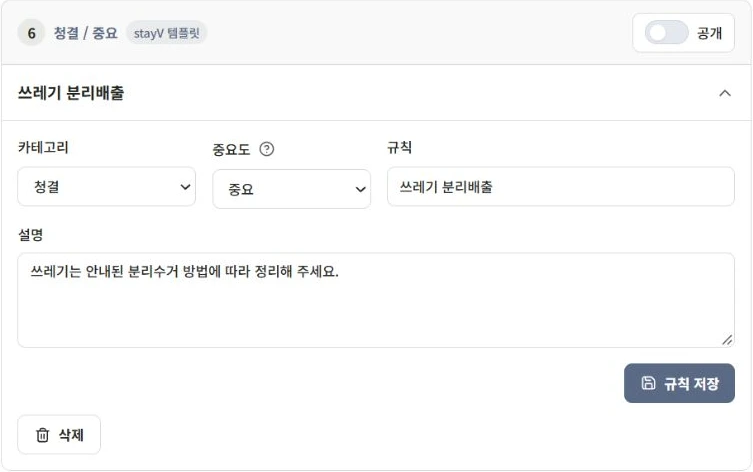
In stayV Host, put waste-sorting guidance for the stay in Rules and departure actions in the check-out instructions. After saving, use the guest preview to ensure essentials such as key return and checking belongings appear first.
See the stayV screens
Read next
Previous: Running short of towels and bedding? Start with replacement standards
Next: When a broken toilet or air conditioner disrupts the next booking too
Related help · stayV Host public help: Arrival, stay-information and amenity cards · Today’s tasks, preparation schedules and reservation messages.